
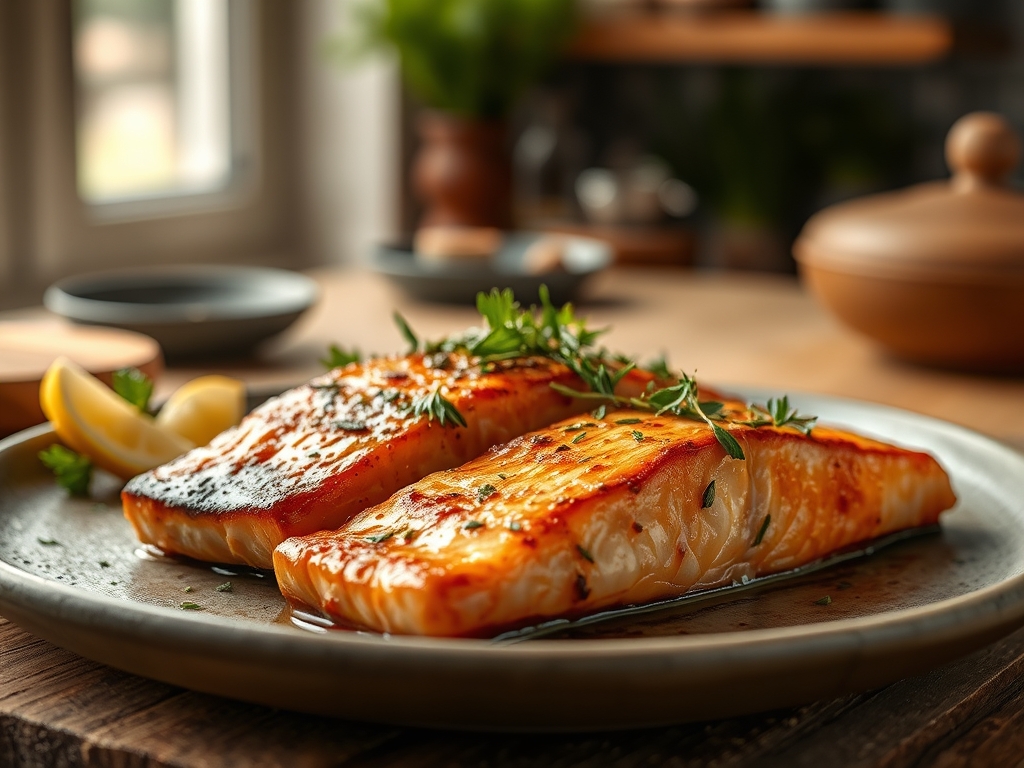
Imagine the sound of a high velocity fan whirring to life; it is the sound of a miniature wind tunnel designed for the sole purpose of perfecting your dinner. When you master convection oven salmon recipes, you are not just cooking; you are orchestrating a high speed thermal exchange that transforms a cold fillet into a masterpiece of translucent flakes and golden skin. The convection setting is your secret weapon because it eliminates the cold pockets of air that plague traditional bake settings. Instead, it surrounds the protein with a consistent, aggressive heat that renders fat with surgical precision. We have all endured that tragic, chalky salmon that feels more like a chore than a luxury. Today, we are leaving that behind. We are aiming for a texture so delicate it practically sighs under the pressure of a fork. By understanding the physics of airflow and the chemistry of myoglobin, you will elevate a simple piece of fish into a restaurant grade experience. Let us dive into the mechanics of the perfect sear and the science of the flake.
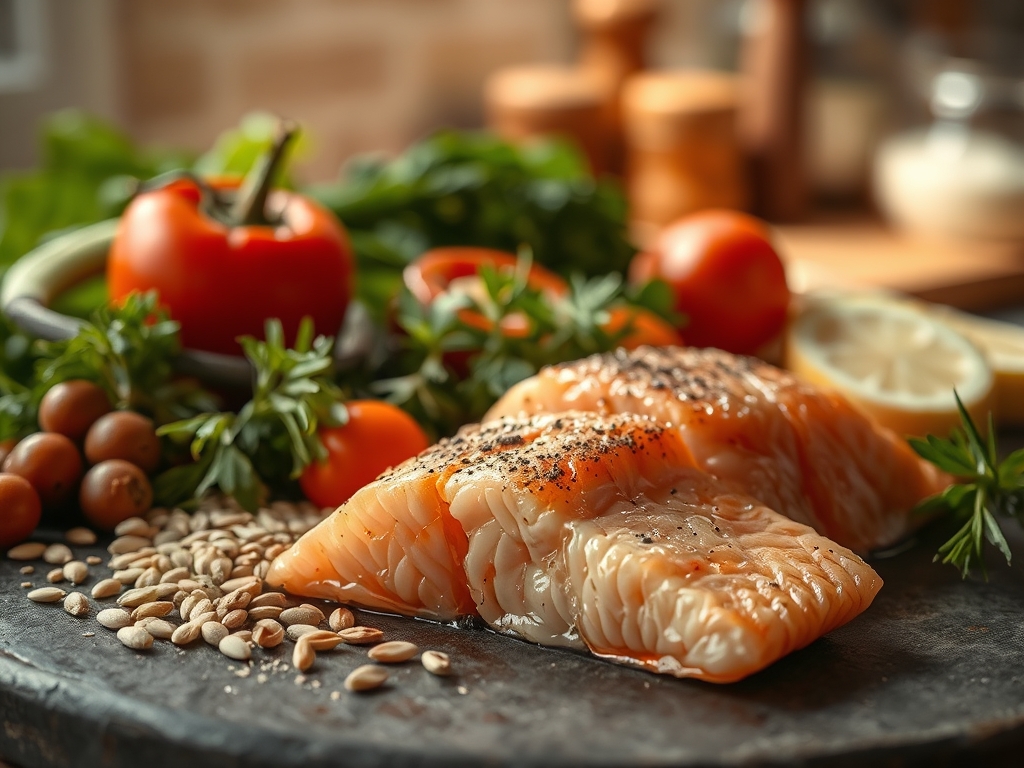
The Gathers:
To begin, your mise-en-place must be as disciplined as a laboratory setup. Start with a center cut fillet of Atlantic or King salmon; look for deep pigmentation and a firm, viscous texture that indicates high lipid content. You will need a digital scale to ensure your portions are uniform, as convection heat is unforgiving to uneven thickness. Gather your aromatics: fresh dill, a head of garlic to be smashed, and a lemon that you will zest with a microplane to release the volatile oils without the bitter pith.
For the fat, choose a high smoke point oil like avocado oil or clarified butter. Unlike standard butter, clarified butter has the milk solids removed, preventing premature burning during the intense air circulation. Your seasoning should include coarse kosher salt; the larger grains draw out moisture through osmosis more effectively than fine table salt.
Smart Substitutions: If you are avoiding dairy, a high quality tahini can provide a creamy, nutty crust that mimics the richness of a butter baste. If you lack fresh herbs, a pinch of sumac offers a piquant, citrusy punch that survives the high heat of a convection cycle better than dried parsley.
The Clock: A Study in Chef's Flow
Efficiency in the kitchen is about managing the "Chef's Flow," which is the sequence of tasks that minimizes idle time. Your total active prep time is approximately 10 minutes, while the cook time ranges from 8 to 12 minutes depending on the thickness of the fillet.
The flow begins with the "Temper Phase." Remove your fish from the refrigerator 20 minutes before cooking. Cold protein fibers contract violently when hitting heat, leading to a tough texture. While the fish tempers, preheat your oven. Remember that convection ovens typically cook 25 percent faster than standard ovens; set your temperature to 375 degrees Fahrenheit to simulate the intensity of a 400 degree conventional bake. This 20 minute window is when you prepare your side dishes or whisk together a bright emulsion in a saucier.
The Masterclass:
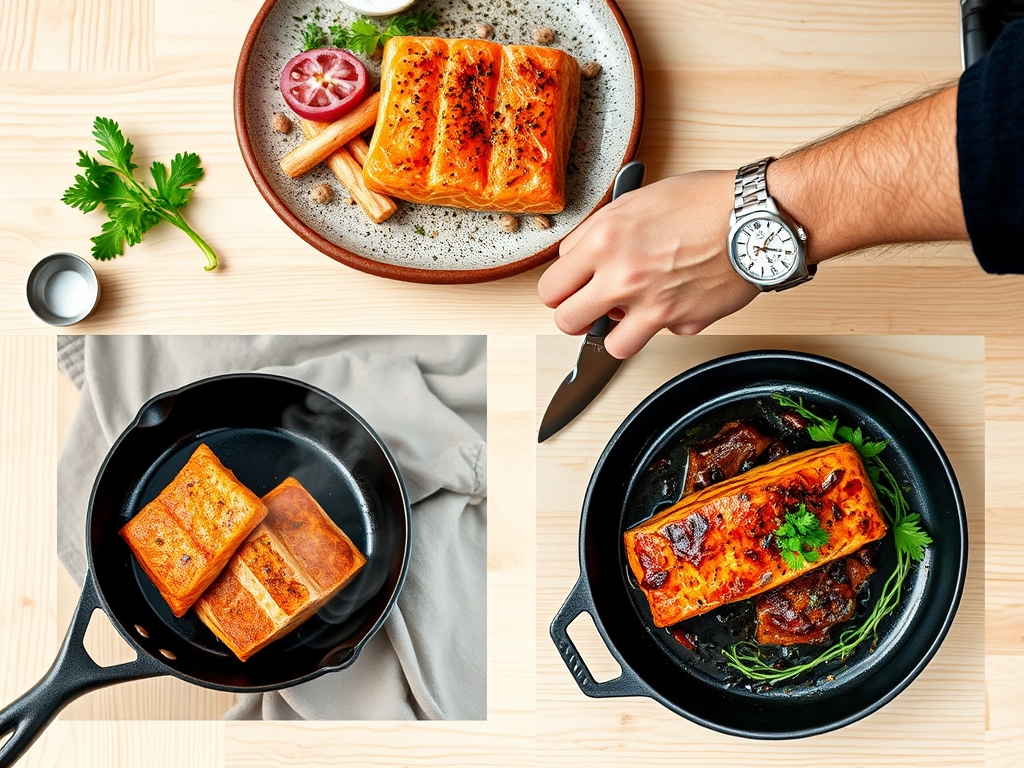
1. The Desiccation Ritual
Use a lint free paper towel to pat the salmon bone dry. Moisture is the enemy of the Maillard reaction. If the surface is damp, the convection fan will spend its energy evaporating water rather than browning the proteins.
Pro Tip: This is known as surface dehydration. By removing external moisture, you allow the heat to immediately begin the process of enzymatic browning, creating a savory crust rather than steaming the fish in its own juices.
2. The Osmotic Seasoning
Season the fish generously from a height of six inches to ensure even distribution. Use your bench scraper to move the fillets onto a parchment lined heavy-bottomed sheet pan. The parchment prevents the delicate skin from bonding to the metal.
Pro Tip: Salt acts as a denaturant. It begins to break down the tightly wound protein coils, allowing them to retain more moisture during the high speed airflow of the convection cycle.
3. The Aerated Roast
Slide the pan into the center rack. The convection fan will circulate heat around the fish, rendering the subcutaneous fat. This fat then bastes the meat from the bottom up. Do not crowd the pan; leave at least two inches between fillets to allow the air to aerate the space.
Pro Tip: Convection cooking increases the heat transfer coefficient. This means the energy moves into the fish much faster than in still air, which is why monitoring the internal temperature with a probe is non-negotiable.
4. The Thermal Finish
Pull the salmon when it hits an internal temperature of 125 degrees Fahrenheit. Use tongs to gently test the resistance of the flakes. The fish should look slightly translucent in the very center.
Pro Tip: This accounts for thermal carryover. Even after the fish leaves the oven, the residual heat on the surface continues to travel inward, raising the core temperature by another 5 to 7 degrees during the rest.
The Deep Dive:
From a macro nutrition perspective, salmon is a powerhouse of Omega-3 fatty acids and high quality protein. A 6 ounce portion typically yields 34 grams of protein and about 20 grams of healthy fats. For those following a Keto lifestyle, this is a cornerstone meal. For a Vegan swap, try thick slabs of cauliflower or "fished" tofu seasoned with dulse flakes to mimic the oceanic salinity.
The Fix-It: Technical Troubleshooting
- The White Gunk (Albumin): If you see white clouds popping out of the fish, you have cooked it too fast or too long. The muscle fibers contracted so hard they squeezed out the liquid protein. Fix: Lower the temp or shorten the cook time.
- Soggy Skin: The air could not reach the bottom. Fix: Use a wire cooling rack set inside your baking sheet to allow 360 degree air circulation.
- Uneven Doneness: The tail is dry while the center is raw. Fix: Fold the thin tail portion under itself to create a uniform thickness across the fillet.
Meal Prep Science: To reheat without losing quality, avoid the microwave. The microwave agitates water molecules, turning the fish rubbery. Instead, use a low temperature oven (275 degrees) with a splash of water covered in foil to create a gentle steam chamber that restores the viscous texture.
The Wrap-Up:
Mastering convection oven salmon recipes is your ticket to effortless, impressive weeknight dinners. By focusing on surface desiccation and respecting the power of thermal carryover, you transform a simple ingredient into a culinary event. Remember that the convection fan is your partner in crisping; let it do the heavy lifting while you focus on the piquant garnishes and the perfect wine pairing. You have the tools, the science, and the technique. Now, go make some magic in that kitchen.
The Kitchen Table:
Why does my salmon get dry in a convection oven?
Convection fans accelerate evaporation. If the fish is not pulled at the correct internal temperature (125-130°F), the moving air will quickly strip the moisture from the protein fibers, resulting in a dry, chalky texture.
Do I need to flip the salmon?
No flipping is required. The primary benefit of a convection oven is the even distribution of heat via air circulation. This cooks the top and bottom simultaneously, especially if you use a wire rack to lift the fish.
What is the best temperature for convection salmon?
Set your oven to 375°F. This is the "sweet spot" that allows the exterior to undergo the Maillard reaction for a savory crust while the interior remains tender and translucent without overcooking the delicate fats.
How do I prevent the white stuff from appearing?
That white substance is albumin. It appears when the salmon is cooked too aggressively. To minimize it, let the fish reach room temperature before cooking and avoid overcooking beyond a medium-rare internal temperature.