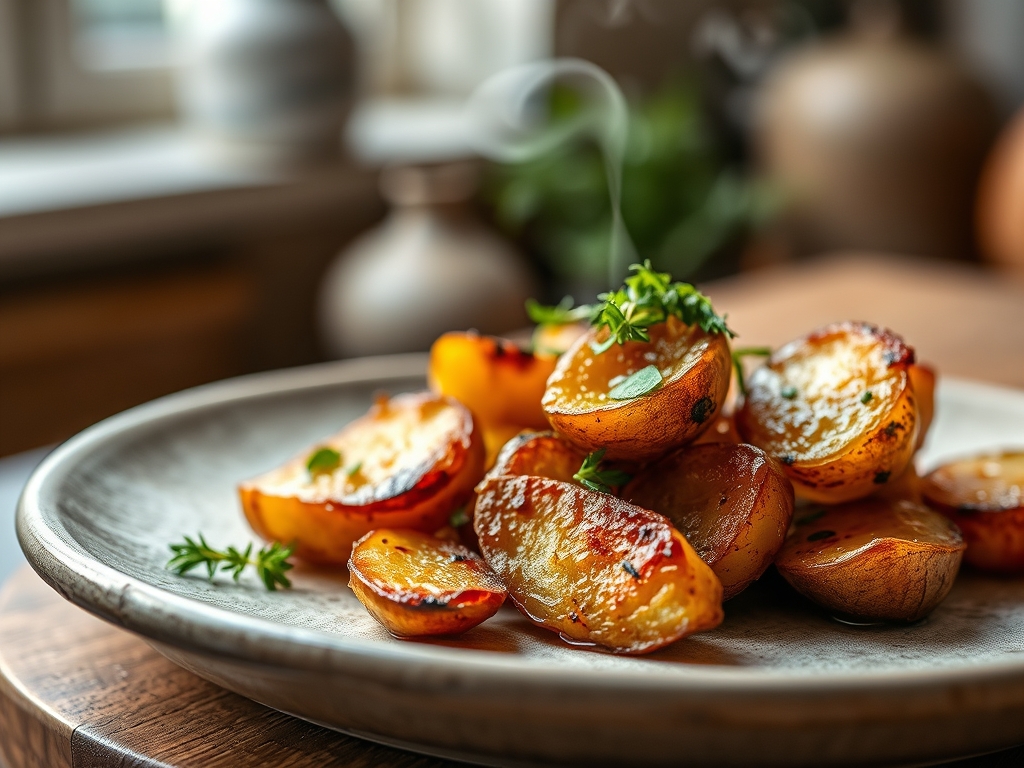
Listen to that sound. It is the distinct, rhythmic crackle of a golden crust shattering under a fork; a sound that signals you have finally mastered the art of the perfect side dish. When searching for roasted potato recipes easy enough for a Tuesday but elegant enough for a gala, most people settle for "good enough." We are not most people. We are going for a structural masterpiece involving a glass-like exterior and a center so fluffy it borders on cloud-like. Achieving this requires more than just heat; it requires an understanding of starch gelatinization and the glorious Maillard reaction.
The secret to why most home fries fail is simple: moisture is the enemy of the crunch. To get that coveted, jagged texture that holds onto salt and herbs, we have to manipulate the surface area of the vegetable itself. By the time we are finished, you will understand exactly how to turn a humble tuber into a culinary centerpiece. Grab your apron and your favorite heavy-bottomed roasting pan; we are about to rewrite your kitchen playbook with a focus on precision and flavor.
The Gathers:
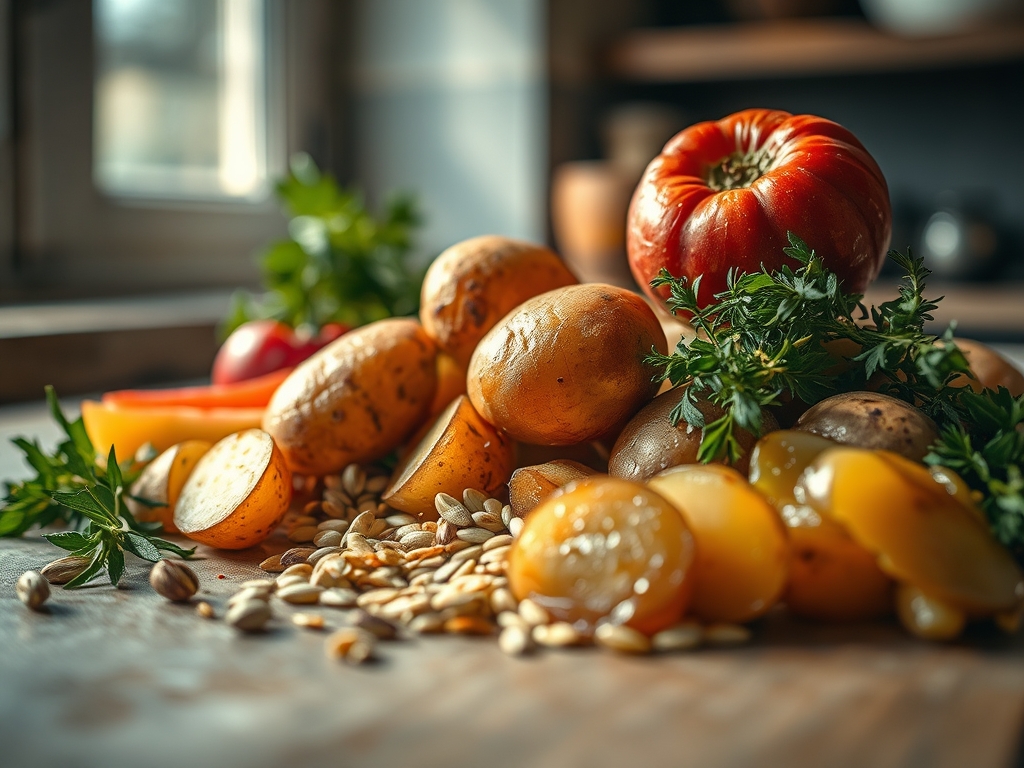
Your mise-en-place is the foundation of your success. For this recipe, we prioritize high-starch varieties like the Russet or the Yukon Gold. Russets offer a dry, mealy interior that fluffs beautifully, while Yukon Golds provide a buttery, viscous mouthfeel and a golden hue. You will need five pounds of potatoes, peeled and cubed into uniform two-inch chunks. Uniformity is not just about aesthetics; it ensures a consistent rate of thermal penetration so every bite finishes at the same moment.
For the fat, skip the bottled vegetable oil. We want something with a high smoke point but deep flavor. Rendered duck fat is the gold standard here, but a high-quality clarified butter or beef tallow works wonders. If you are keeping it plant-based, an extra virgin olive oil with a high polyphenol count will suffice. You will also need kosher salt (the coarse grains are essential for physical abrasion), baking soda, fresh rosemary, and four cloves of garlic crushed with the flat side of a chef knife.
Smart Substitutions: If you lack fresh rosemary, do not use dried needles; they become woody and unpleasant. Instead, infuse your oil with a pinch of smoked paprika or a dash of nutritional yeast for a piquant, savory profile. If you find yourself without baking soda, a splash of vinegar in the boiling water can help set the pectin, though the result will be a smoother, rather than craggy, crust.
The Clock
Efficiency in the kitchen is defined by Chef's Flow. This is the ability to overlap tasks so that no second is wasted. Your total active prep time is approximately 15 minutes, while the oven does the heavy lifting for 45 to 50 minutes.
The flow begins with the water. While you peel and chop, your pot should already be reaching a rolling boil. While the potatoes parboil, you are mincing your aromatics and preheating your roasting pan. Never put cold potatoes onto a cold pan. By the time the potatoes are drained and shaggy, your oil should be shimmering and ready to receive them. This synchronization ensures that the starch never has a chance to cool down and "set" before it hits the high heat of the oven.
The Masterclass
1. The Alkaline Parboil
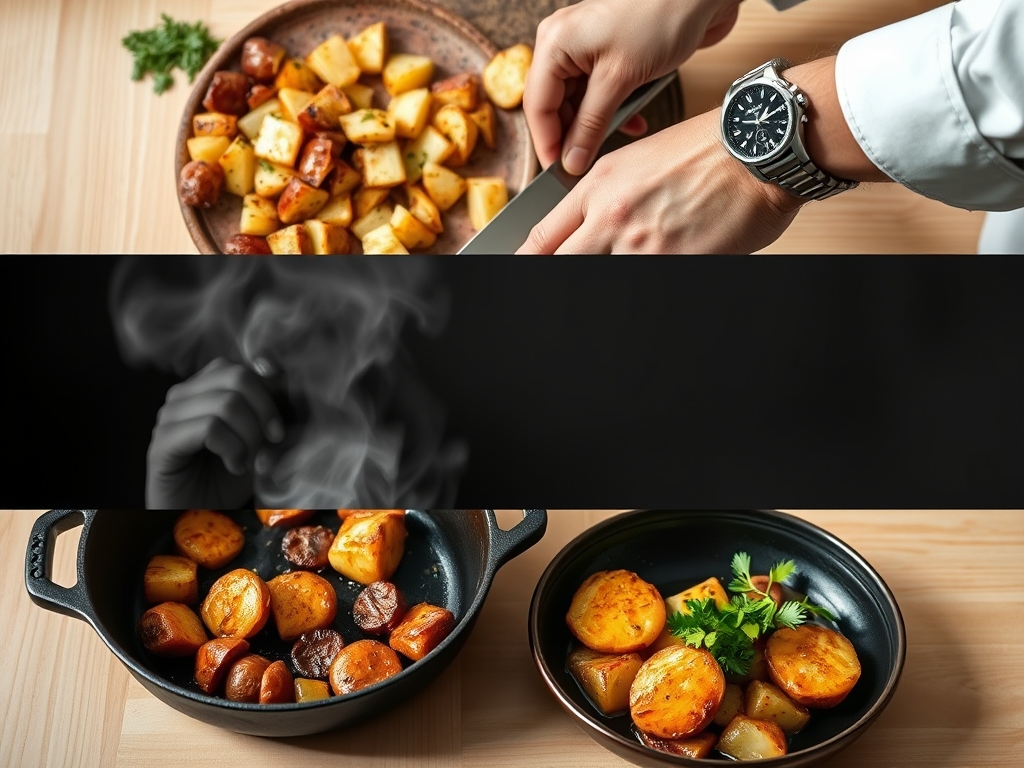
Drop your potato chunks into boiling water seasoned heavily with salt and a half-teaspoon of baking soda. Boil until the edges are tender but the centers still hold resistance.
Pro Tip: The baking soda breaks down the potato's exterior pectin, creating a starchy slurry on the surface. This slurry eventually dehydrates in the oven to form the thick, crunchy crust. This is the science of surface area maximization.
2. The Rough-Up
Drain the potatoes in a colander and let them steam-dry for two minutes. Use a bench scraper or simply shake the colander vigorously until the outsides of the potatoes look mashed and "shaggy."
Pro Tip: This physical agitation creates microscopic "fuzz" on the potato surface. More fuzz equals more surface area, which leads to more contact with the hot oil and a more dramatic Maillard reaction.
3. The Fat Infusion
In a small saucier, heat your fat of choice with the garlic and rosemary. Once the garlic is golden, strain the solids out and reserve them. Toss the shaggy potatoes in the infused oil until they are fully coated.
Pro Tip: Infusing the oil first prevents the garlic and herbs from burning during the long roast. Burning creates bitter carbon notes that ruin the delicate sweetness of the potato starch.
4. The High-Heat Roast
Spread the potatoes onto a preheated heavy-bottomed sheet pan. Ensure they are not crowding each other; they need space for air to circulate and carry away moisture. Roast at 450 degrees Fahrenheit.
Pro Tip: Use a heavy pan to prevent warping and ensure even heat distribution. A thin pan will have "hot spots" that burn the bottoms before the centers are creamy.
5. The Aeration Flip
Every 15 minutes, use a wide metal spatula to flip the potatoes. This ensures that every facet of the potato makes contact with the hot metal of the pan.
Pro Tip: This process utilizes conductive heating. The direct contact with the pan is what creates the "glass" crunch, while the ambient oven air handles the interior fluffing.
6. The Final Seasoning
Once the potatoes are deep brown and resonate with a hollow sound when tapped, remove them from the oven. Toss them in a bowl with the reserved crispy garlic, rosemary, and a final sprinkle of flaky sea salt.
Pro Tip: Thermal carryover means the potatoes will continue to cook for a few minutes after leaving the oven. Adding the aromatics at the end preserves their volatile oils for maximum fragrance.
The Deep Dive
From a nutritional standpoint, potatoes are a powerhouse of potassium and Vitamin C, though the addition of fats increases the caloric density. One serving provides roughly 280 calories and 4 grams of fiber. For Vegan adjustments, stick to avocado oil or refined coconut oil. For Keto followers, this recipe can be applied to cauliflower florets, though the roasting time will be halved. This recipe is naturally Gluten-Free.
The Fix-It:
- Soggy Potatoes: You likely overcrowded the pan. The steam from one potato trapped the next. Spread them across two pans next time.
- Burnt Bottoms: Your oven rack is too low. Move it to the center position to balance the heat from the top and bottom elements.
- Bland Interior: You did not salt the boiling water enough. The potato must be seasoned from the inside out during the parboil stage.
Meal Prep: To reheat these while maintaining "day-one" quality, avoid the microwave at all costs. The microwave vibrates water molecules, making the crust limp. Instead, use an air fryer at 400 degrees for 5 minutes or a dry skillet over medium heat to re-crisp the exterior.
The Wrap-Up
Mastering roasted potato recipes easy enough for daily life transforms your entire culinary repertoire. By manipulating the pH of your water and utilizing the power of surface area, you have moved beyond simple cooking into the realm of food science. These potatoes are not just a side; they are a conversation starter. Now, go forth, get that pan screaming hot, and listen for the crunch that proves you are the master of your kitchen.
The Kitchen Table
Why add baking soda to the water?
Baking soda creates an alkaline environment that breaks down the potato's pectin. This creates a starchy paste on the surface which, when roasted, dehydrates into an incredibly thick and extra-crunchy crust that outclasses standard roasting methods.
Can I roast potatoes without boiling them first?
You can, but you will miss the signature "glass" crunch. Parboiling gelatinizes the surface starch and ensures the interior is fully cooked and fluffy by the time the exterior reaches a deep, golden-brown color.
What is the best oil for crispy potatoes?
High smoke-point fats with saturated fats work best. Duck fat, beef tallow, or clarified butter provide the best flavor and structural integrity. For plant-based options, use avocado oil or a high-quality refined olive oil.
How do I keep roasted potatoes from sticking?
Preheat your roasting pan before adding the potatoes and fat. When the cold starch hits the hot oil on a hot surface, it sears immediately rather than bonding to the metal, allowing for a clean release.