
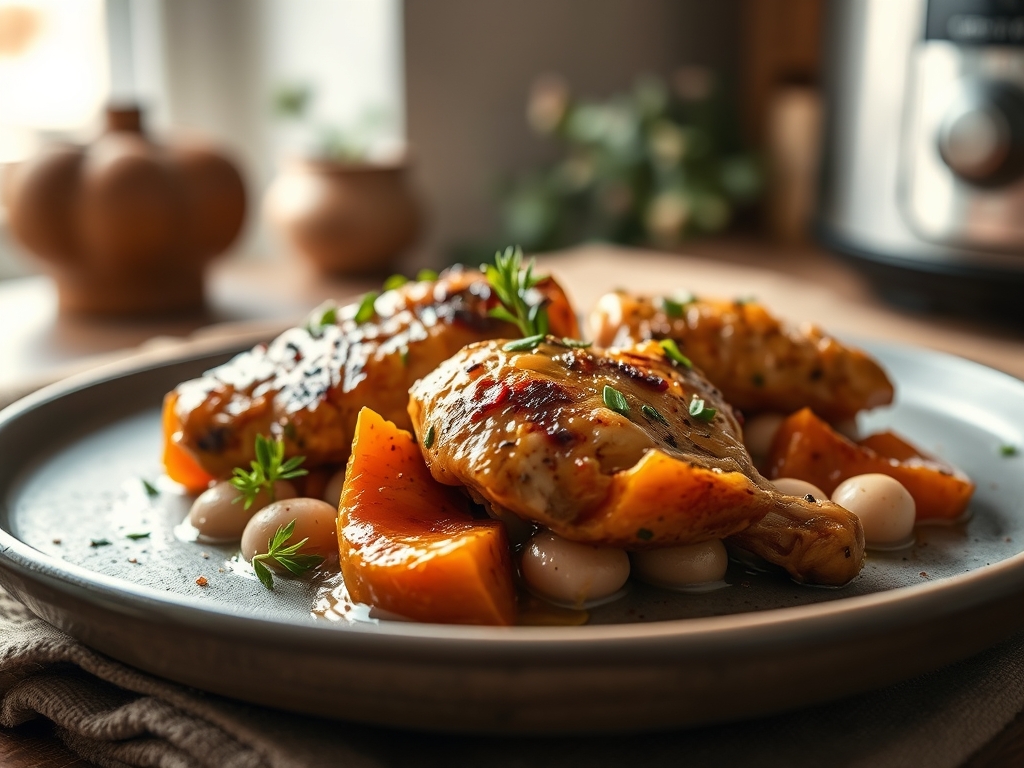
Imagine the scent of caramelized sugars and savory aromatics wafting through your kitchen at 5:00 PM. It is the ultimate domestic victory. These slow cooker chicken and sweet potato recipes transform humble tubers and lean protein into velvet-textured masterpieces while you are busy conquering the world. We are talking about effortless, nutrient-dense alchemy that tastes like a weekend project but requires only fifteen minutes of active labor.
The magic lies in the structural integrity of the sweet potato. Unlike waxy white potatoes that can turn into a grainy slurry, the starch in a sweet potato undergoes a slow enzymatic breakdown. This process converts complex carbohydrates into maltose; it creates a natural sweetness that balances the savory, salt-forward profile of the chicken. Whether you are craving a spicy Moroccan tagine or a creamy coconut curry, this duo provides the perfect canvas for high-impact flavors.
By the time you lift the lid, the chicken has reached that elusive fork-tender state where the connective tissue has fully dissolved into gelatin. This adds a luxurious mouthfeel to the cooking liquid without the need for heavy creams or artificial thickeners. Grab your favorite mug of tea and let us dive into the molecular mechanics of the perfect slow-cooked feast.
The Gathers:
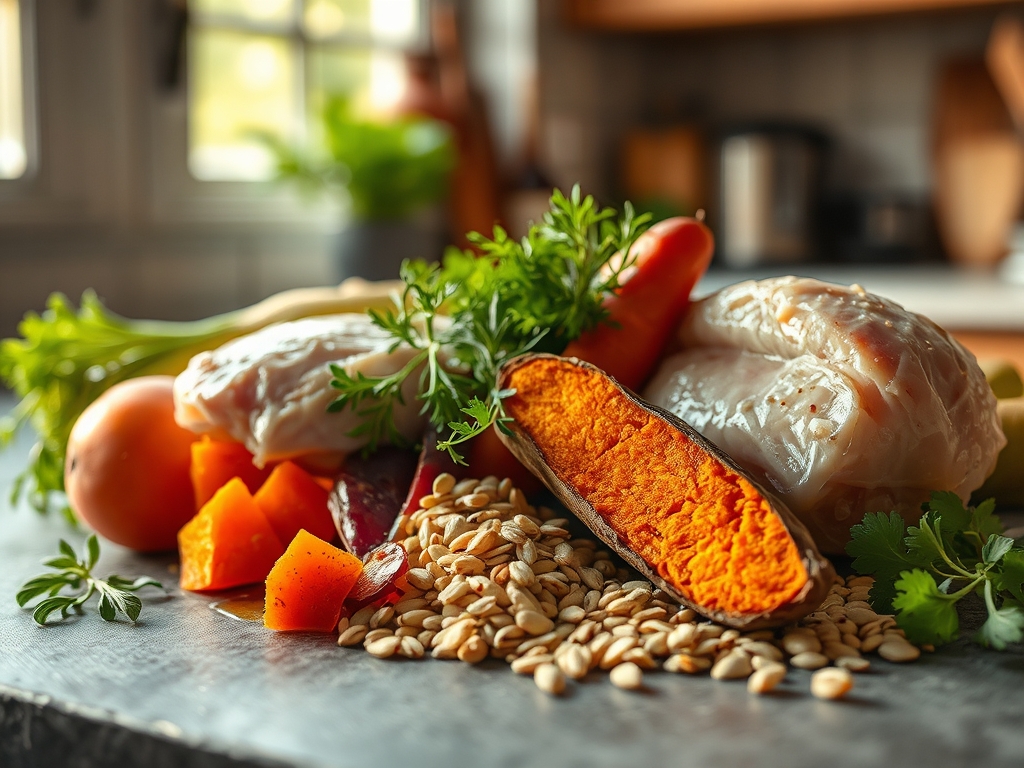
To execute these recipes with precision, your mise-en-place must be intentional. Start with your protein; boneless, skinless thighs are the gold standard here because their higher fat content allows them to withstand the prolonged thermal exposure of a slow cooker without drying out. If you insist on using breasts, you must adjust your timing to prevent the fibers from becoming stringy and parched.
Next, focus on the sweet potatoes. Use a sharp chef knife to cube them into uniform one-inch pieces. Consistency is not just for aesthetics; it ensures that every piece reaches the same level of starch gelatinization simultaneously. You will also need aromatics like shallots, garlic, and ginger. Use a microplane to grate your ginger into a fine paste; this increases the surface area and allows the gingerols to infuse the entire pot rather than leaving you with woody chunks.
Smart Substitutions:
If you find yourself without sweet potatoes, butternut squash is a viable anatomical substitute due to its similar density and sugar content. For a low-carb tweak, swap half the potatoes for cauliflower florets added in the final hour. If you are out of fresh aromatics, a high-quality bouillon base or a splash of fish sauce can provide that essential umami backbone. Always keep a digital scale nearby to ensure your ratios are exact; precision is the difference between a soup and a stew.
The Clock:
Efficiency in the kitchen is about mastering the "Chef's Flow." For these recipes, your active prep time is approximately 15 to 20 minutes. This includes peeling, dicing, and perhaps a quick sear of the meat. Once the lid is closed, the "passive phase" takes over.
On the Low setting, expect a duration of 6 to 8 hours. This is the preferred method for developing deep, complex flavors. If you are in a time crunch, the High setting will get you to the finish line in 3 to 4 hours. However, be warned: high heat can cause the proteins to contract too quickly, potentially squeezing out moisture. Use a digital meat thermometer to ensure the chicken reaches an internal temperature of 165 degrees Fahrenheit. Anything beyond that is just inviting dehydration.
1. The Maillard Foundation
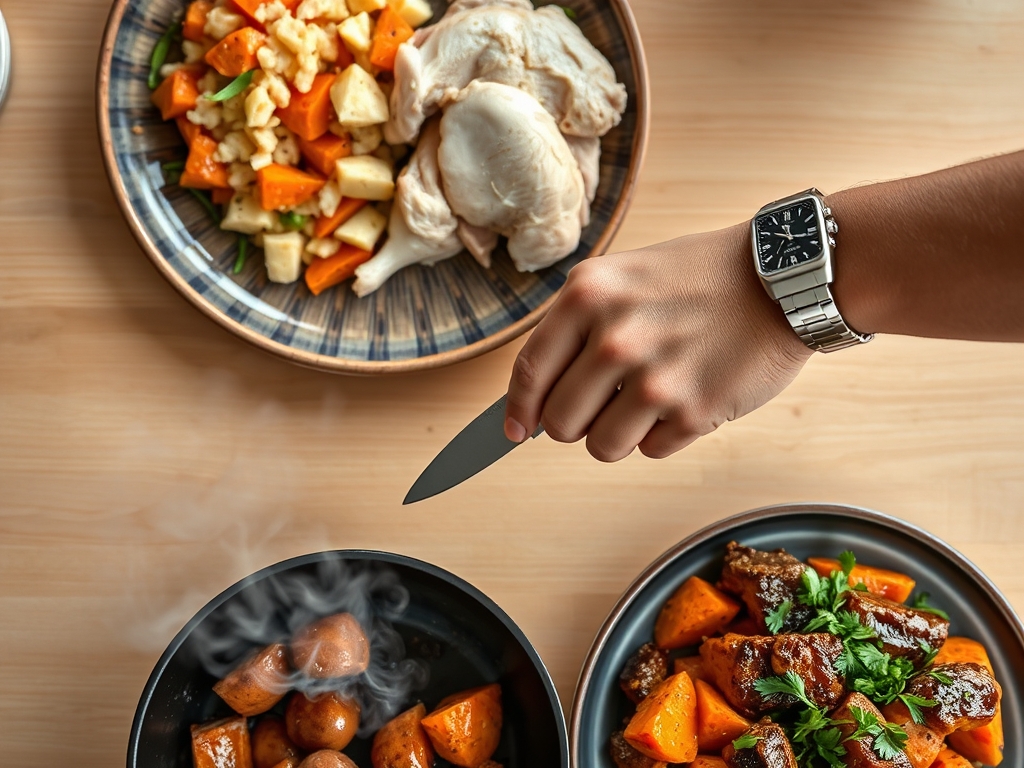
Before anything hits the slow cooker, use a heavy-bottomed skillet to sear your chicken pieces in high-smoke-point oil. You are looking for a deep golden crust.
Pro Tip: This is the Maillard Reaction. This chemical reaction between amino acids and reducing sugars creates hundreds of different flavor compounds that a slow cooker cannot produce on its own due to the presence of moisture and lower temperatures.
2. Deglaze and Capture
Once the chicken is browned, remove it and pour a splash of stock or white wine into the hot skillet. Use a bench scraper or wooden spoon to lift the browned bits (the fond) from the bottom.
Pro Tip: This step captures concentrated flavor molecules that would otherwise be wasted. These bits are packed with soluble proteins that act as a natural flavor enhancer for your sauce.
3. Layering the Aromatics
Place your cubed sweet potatoes at the bottom of the slow cooker insert, followed by the seared chicken and your deglazing liquid. Add your spices and aromatics on top.
Pro Tip: Placing the potatoes at the bottom puts them closest to the heating element. This ensures they soften fully while the chicken gently steams on top; this prevents the meat from overcooking via direct conduction.
4. The Emulsification Finish
In the final thirty minutes of cooking, whisk in any fats or thickeners, such as coconut milk or a cornstarch slurry, using a saucier or small bowl before adding to the pot.
Pro Tip: Adding dairy or thickeners too early can cause them to break or curdle. Waiting until the end ensures a viscous, smooth sauce that coats the back of a spoon perfectly without separating.
The Deep Dive:
Macro Nutrition: These meals are a powerhouse of balanced nutrition. A standard serving provides roughly 35 grams of protein and 30 grams of complex carbohydrates. Sweet potatoes are rich in beta-carotene and fiber, which helps regulate blood sugar spikes. By utilizing the slow cooker, you minimize the need for added fats, making this a heart-healthy option.
Dietary Swaps:
- Vegan: Replace chicken with chickpeas or extra-firm tofu and use vegetable broth.
- Keto: Replace 80 percent of the sweet potatoes with radishes or turnips, which lose their peppery bite when slow-cooked.
- GF: Naturally gluten-free, but ensure your chicken stock does not contain hidden wheat thickeners.
The Fix-It:
- Too Watery: If your stew looks like soup, remove the lid and cook on High for 45 minutes to allow evaporation. Alternatively, mash a few of the sweet potatoes against the side of the pot to thicken the liquid.
- Bland Flavor: You likely need acid. Stir in a teaspoon of apple cider vinegar or a squeeze of lime to brighten the heavy fats.
- Mushy Potatoes: You cut them too small. Next time, aim for larger chunks or choose a "firm" variety of sweet potato like the Japanese Murasaki.
Meal Prep Science: To maintain "day-one" quality, cool the mixture rapidly in shallow containers before refrigerating. When reheating, add a tablespoon of water or stock. Use a microwave at 70 percent power to prevent the chicken from "popping" and becoming rubbery; this gentle reheating preserves the cellular structure of the potato.
The Wrap-Up:
Mastering slow cooker chicken and sweet potato recipes is like having a secret weapon in your culinary arsenal. It is the intersection of high-level nutrition and sophisticated flavor profiles, all achieved with minimal interference. By understanding the science of the Maillard reaction and the thermal properties of your ingredients, you move from being a recipe-follower to a kitchen authority. Go ahead and set that timer; your future self will thank you when dinner is served with zero stress and maximum impact.
The Kitchen Table:
Can I put frozen chicken in the slow cooker?
No. Putting frozen meat in a slow cooker keeps the food in the "danger zone" (40 to 140 degrees Fahrenheit) for too long. This allows bacteria to multiply rapidly. Always thaw your chicken completely in the refrigerator before starting.
Why are my sweet potatoes still hard after 6 hours?
This usually happens if you add acidic ingredients like tomatoes or lemon juice too early. Acid prevents the pectin in vegetables from breaking down. To fix this, ensure the potatoes are submerged in liquid and save acidic finishes for the end.
Do I have to brown the chicken first?
While not strictly necessary for safety, browning is essential for flavor. Without the sear, your chicken will lack depth and may look unappealingly pale. Searing also helps the meat hold its shape during the long breakdown process.
How long do these leftovers stay fresh?
When stored in an airtight container, these meals last for three to four days in the refrigerator. The flavors actually improve over the first 24 hours as the spices continue to permeate the starches and proteins.