
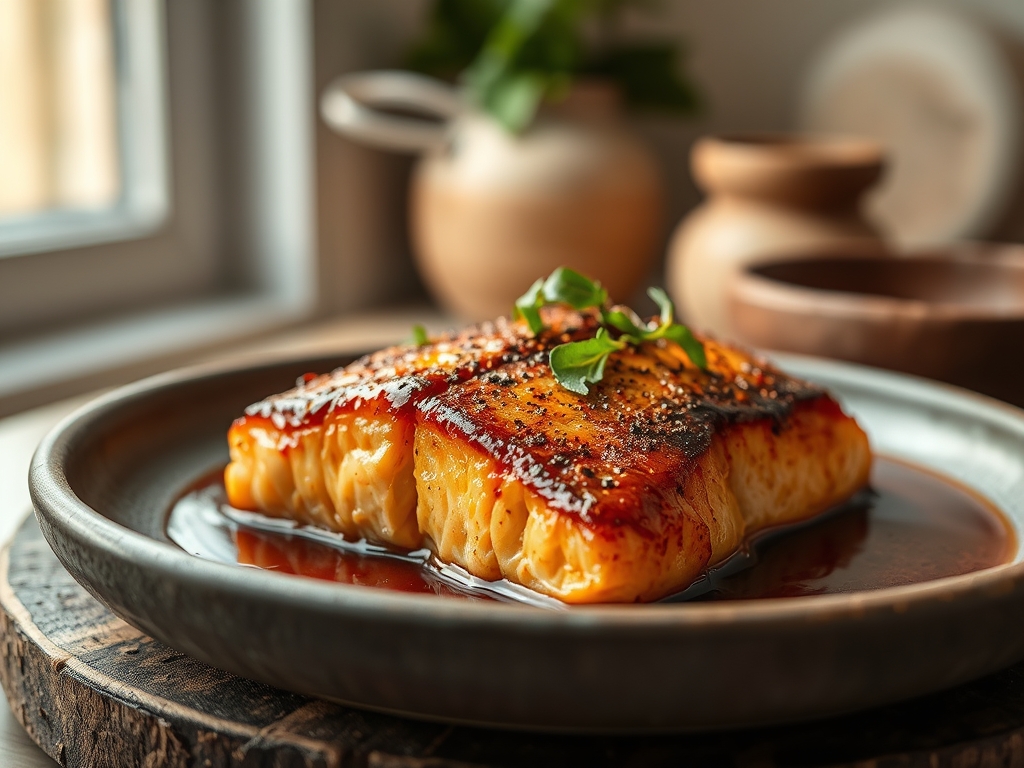
Imagine the sound of a heavy-bottomed sheet pan sliding into a preheated oven while the air fills with the scent of toasted sesame and fermenting beans. When you look for baked salmon recipes soy sauce, you are not just searching for dinner; you are hunting for that perfect equilibrium between oceanic richness and salty umami. This dish is the ultimate weeknight flex because it feels like high-end catering but requires about as much effort as boiling water. We are aiming for a crust that is dark, glossy, and piquant, while the interior remains a buttery, translucent pink. The science of the perfect bake lies in how the amino acids in the soy sauce interact with the natural fats of the fish under intense heat. We are going to transform a simple fillet into a masterpiece of texture and taste by leveraging the Maillard reaction to its fullest potential. Grab your apron and your favorite chef's knife; we are about to turn your kitchen into the best bistro in town.
The Gathers:
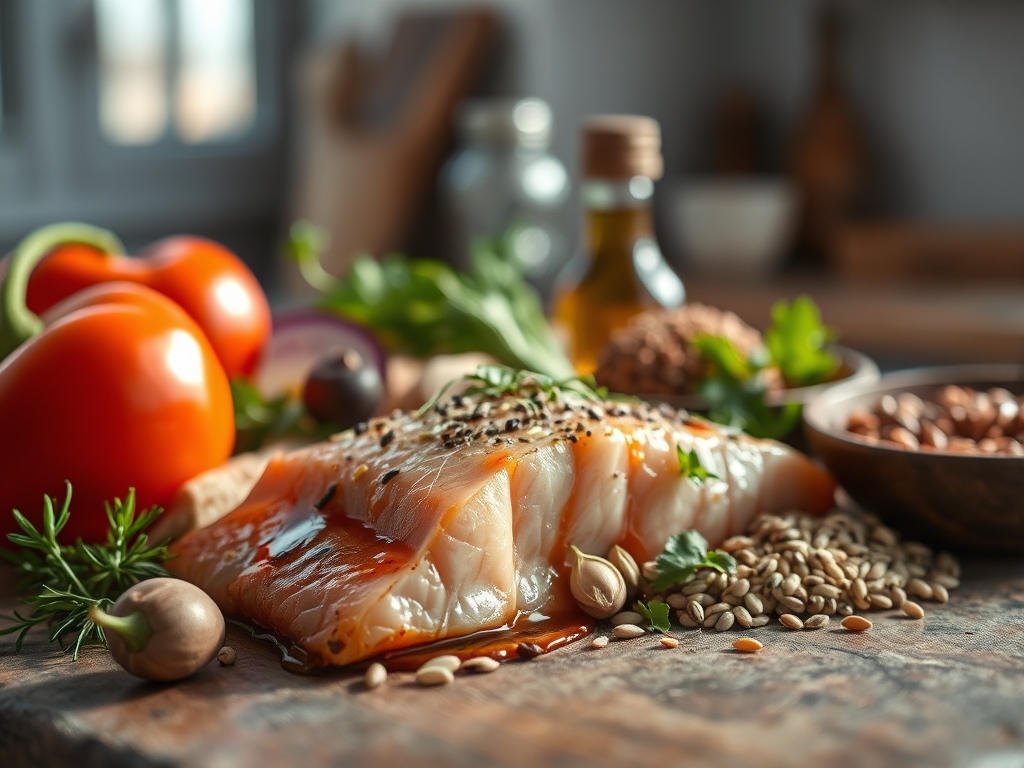
Setting your mise-en-place is the difference between a frantic kitchen and a fluid one. For this recipe, you need center-cut Atlantic or King salmon fillets. Use a digital scale to ensure each portion is roughly 6 ounces; this ensures uniform cooking times across the tray. Your soy sauce is the backbone here. I recommend a traditionally brewed Shoyu for its complex bouquet, but a Tamari works beautifully if you need a gluten-free profile.
You will also need a viscous sweetener to encourage caramelization. Honey or maple syrup provides the glucose necessary to bind with the proteins. For aromatics, grab a microplane to grate fresh ginger and garlic into a fine paste. This increases the surface area, allowing the oils to infuse the marinade more rapidly. If you find yourself out of ginger, a dash of ground galangal offers a similar woody heat. For fats, toasted sesame oil adds a nutty depth that olive oil simply cannot replicate. If you are watching your sodium, a splash of coconut aminos is a smart substitution that maintains that deep, savory profile without the salt spike.
The Clock
Efficiency in the kitchen is all about the "Chef's Flow." Total active prep time is exactly 10 minutes, with a 15-minute marination window to allow the brine to penetrate the muscle fibers. The bake itself takes between 12 to 15 minutes depending on the thickness of your cut.
The flow works like this: Preheat your oven to 400 degrees Fahrenheit first. While the heating elements stabilize, whisk your glaze in a small saucier. By the time you have patted the fish dry and applied the sauce, the oven is ready. This overlap ensures that the fish does not sit at room temperature for too long, maintaining food safety and optimal texture.
The Masterclass
1. The Desiccation Phase
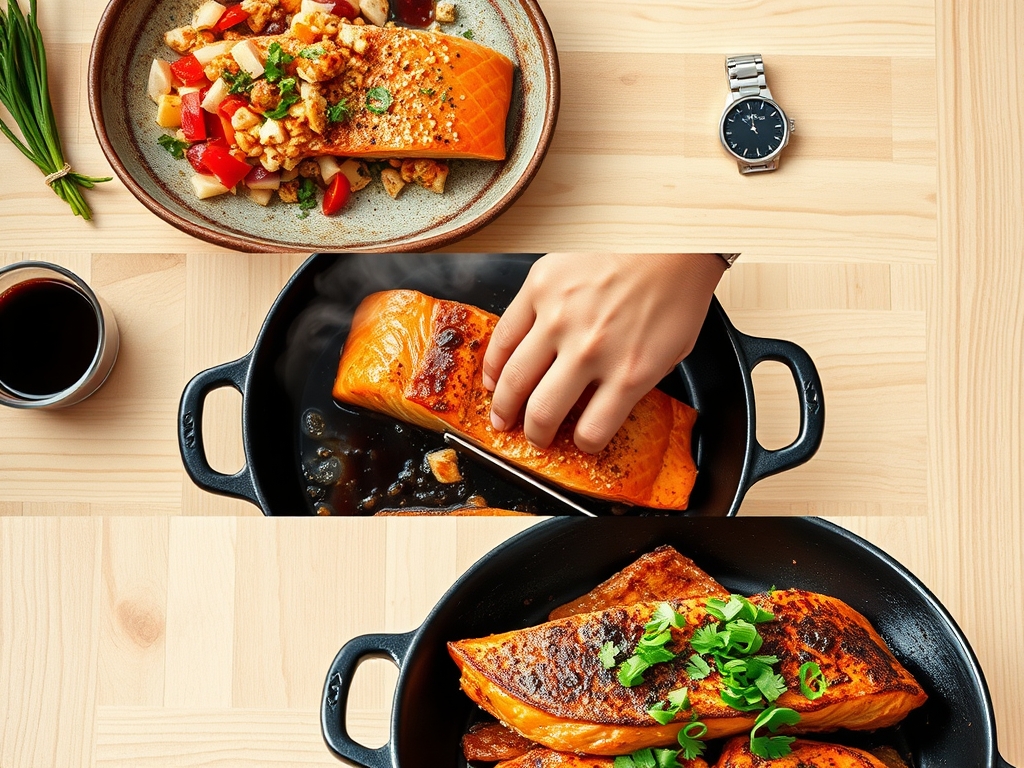
Pat the salmon fillets bone-dry using heavy-duty paper towels. Moisture is the enemy of a good sear. If the surface is damp, the oven's energy will be wasted evaporating water rather than browning the fish.
Pro Tip: This is known as surface desiccation. By removing external water, you allow the Maillard reaction to begin immediately upon contact with heat, resulting in a deeper flavor profile.
2. The Emulsion Whisk
In your saucier, combine the soy sauce, honey, ginger, and garlic. Use a small whisk to vigorously aerate the mixture until it is slightly frothy and fully emulsified.
Pro Tip: Emulsification ensures that the fats and sugars are evenly distributed. This prevents the honey from sinking to the bottom of the pan and burning before the fish is cooked.
3. The Cold Marination
Place the fillets in a shallow dish and pour over half the glaze. Let it sit for 15 minutes in the refrigerator.
Pro Tip: Cold marination allows the salt in the soy sauce to act as a dry brine, denaturing the proteins slightly so they retain more moisture during the high-heat bake.
4. The Sheet Pan Layout
Line a heavy-rimmed baking sheet with parchment paper. Arrange the fillets with at least two inches of space between them.
Pro Tip: Proper spacing prevents "crowding the pan," which causes the fish to steam in its own juices rather than roasting. Airflow is essential for that glossy, lacquered finish.
5. The High-Heat Roast
Slide the pan onto the center rack. The high heat will cause the sugars in the glaze to thicken and cling to the scales of the fish.
Pro Tip: This stage involves thermal radiation. The consistent heat from the oven walls cooks the fish from the outside in, creating a gradient of texture from crispy to tender.
6. The Glaze Application
Halfway through the cooking process, use a silicone brush to apply the remaining glaze. This creates layers of flavor.
Pro Tip: Layering the glaze is a technique called "lacquering." Each layer dehydrates slightly, building a concentrated umami crust that is thick and savory.
7. The Carryover Rest
Remove the salmon when the internal temperature hits 130 degrees Fahrenheit. Move the fillets to a cooling rack using tongs or a fish spatula.
Pro Tip: This utilizes thermal carryover. The internal temperature will continue to rise about 5 degrees while resting, bringing the fish to a perfect, flaky 135 degrees without overcooking.
The Deep Dive
From a nutritional standpoint, this dish is a powerhouse. A standard 6-ounce serving provides roughly 34 grams of high-quality protein and is rich in Omega-3 fatty acids, which are essential for brain health. For those on specific diets, the swaps are simple. Keto followers should replace honey with a liquid monk fruit sweetener. Vegans can replicate the texture using "salmon" blocks made of pressed tofu or konjac, though the baking time will increase to ensure the soy sauce penetrates the denser plant proteins.
If you hit a snag, don't panic. If your glaze is too thin, it likely means the honey-to-soy ratio was off; simply whisk in a teaspoon of cornstarch to stabilize the viscosity. If the fish white "goo" (albumin) starts leaking out, your oven is too hot. This is just protein pushing out of the muscle fibers; it is edible but indicates the fish is cooking too fast. If the skin sticks to the parchment, use a bench scraper to gently lift it from the bottom.
For meal prep, reheating salmon is a delicate science. Avoid the microwave at all costs as it turns the fats rancid and the texture rubbery. Instead, place the salmon in a covered pan with a tablespoon of water over low heat. The steam will gently rehydrate the proteins without "re-cooking" the delicate fats.
The Wrap-Up
Mastering baked salmon recipes soy sauce is like learning a secret handshake in the culinary world. It is the perfect blend of technical precision and soulful, pantry-staple cooking. By understanding the chemistry of the glaze and the physics of the oven, you have moved beyond following a recipe to truly "knowing" the ingredients. Serve this with a side of charred bok choy or fluffy jasmine rice, and watch as your dinner guests marvel at the professional-grade crust you achieved in your own kitchen. You have got the tools, you have got the science, and now you have the perfect meal.
The Kitchen Table
How do I prevent the white stuff from appearing on salmon?
That white substance is albumin, a protein that escapes when salmon cooks too quickly. To minimize it, brine the fish in soy sauce first and bake at a steady 400 degrees rather than using the broiler.
Can I use frozen salmon for this recipe?
Yes, but ensure it is fully thawed and patted dry with a paper towel. Excess moisture from ice crystals will dilute your soy sauce glaze and prevent the fish from developing a proper crust.
What is the best soy sauce for baking?
A traditionally brewed Shoyu or a dark soy sauce works best. Dark soy sauce contains molasses, which aids in the caramelization process and provides a deeper, mahogany color to the finished baked salmon.
How long does leftover soy sauce salmon stay fresh?
Store leftovers in an airtight container in the refrigerator for up to two days. For the best texture, flake the cold salmon over a salad rather than reheating it to avoid overcooking the delicate fats.